Summary
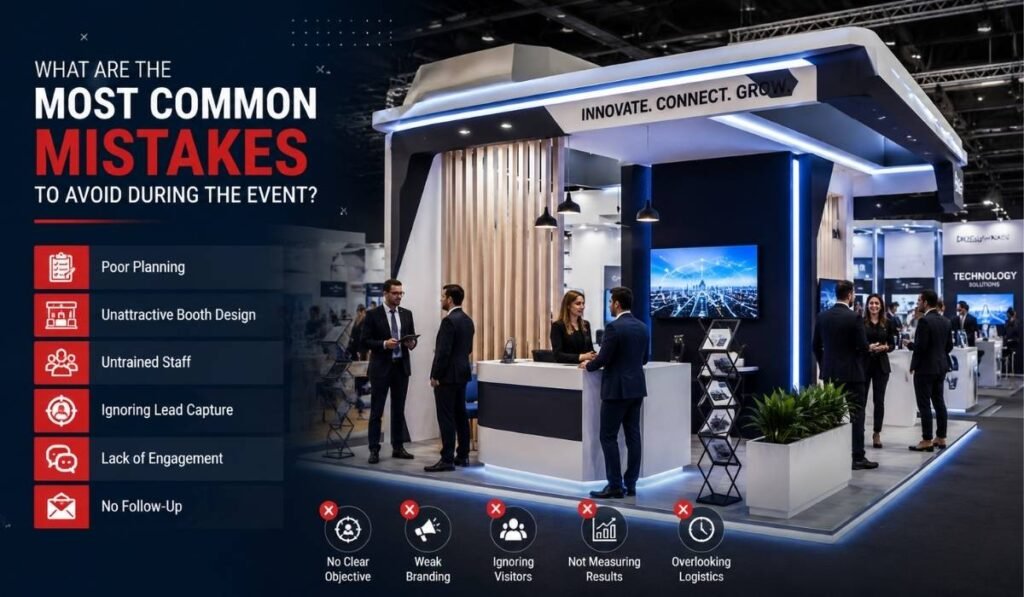
Avoiding common event mistakes can make a big difference in how successful your exhibition, trade show, or corporate event becomes. In 2026, businesses need better planning, clear goals, strong booth design, trained staff, proper budgeting, smooth vendor coordination, and fast post-event follow-up. Many events fail because organizers focus only on setup and forget visitor experience, engagement, lead capture, and brand presentation. A successful event needs every detail to work together before, during, and after the show. When you avoid these mistakes, your event becomes more organized, more professional, and more valuable for your business.
Introduction
Planning an event is not only about booking a venue and setting up a booth. Whether you are taking part in a trade show, corporate event, conference, or exhibition in Dubai, every small detail matters. A well-planned event can help your business attract visitors, generate leads, build trust, and create strong brand visibility. But a poorly managed event can waste time, money, and effort.
Many businesses spend a good amount on exhibition space, booth design, marketing, staff, and travel, but still fail to get the results they expect. In most cases, the reason is not one big problem. It is a mix of common mistakes such as weak planning, poor booth layout, unclear goals, untrained staff, no lead capture system, and poor follow-up after the event.
Dubai exhibitions are highly competitive. Visitors see many brands in one place, so your event strategy must be clear, professional, and visitor-focused. If your booth is hard to understand, your team is not prepared, or your follow-up is delayed, you may lose good business opportunities.
This guide explains the most common mistakes to avoid during an event and how to fix them before they affect your results.
Not Setting Clear Event Goals
One of the biggest mistakes businesses make is joining an event without clear goals. Many companies book exhibition space because their competitors are attending or because the event looks popular. But without a clear purpose, it becomes hard to measure success.
Your event goal should be decided before booth design, marketing, staffing, and budgeting. If your goal is lead generation, your booth should support easy conversations and quick data collection. If your goal is product launch, your booth should include demo space and strong visual branding. If your goal is networking, your team should be trained to start meaningful discussions.
Why This Is a Mistake
Without clear goals, your team may not know what to focus on. You may spend money on unnecessary items and miss the things that matter. After the event, it also becomes difficult to understand whether the event was successful or not.
How to Avoid It
Before the event, answer these questions:
- What do we want to achieve?
- Who is our target audience?
- How many leads do we want to collect?
- What products or services do we want to promote?
- What message should visitors remember?
- What action should visitors take after meeting us?
Clear goals help your full event plan stay focused.
Choosing the Wrong Booth Location
Booth location can affect visitor traffic. Many exhibitors choose a space only because it is cheaper or available, without checking the event floor plan properly.
A booth hidden in a low-traffic corner may not get enough visitors. A booth near a busy aisle, entrance, conference room, food area, or main sponsor section usually has better visibility.
Why This Is a Mistake
Even a good booth design may not perform well if people cannot easily see it. Poor location can reduce foot traffic, brand exposure, and lead opportunities.
How to Avoid It
Study the floor plan early. Check where the entrances, exits, networking areas, seminar rooms, cafés, and major exhibitors are located. If possible, book your space early so you have more location options.
Also, choose your stand type carefully. Inline booths, corner booths, peninsula stands, and island stands all need different design planning.
Poor Exhibition Stand Design
Your exhibition stand is one of the first things visitors notice. If your booth looks dull, confusing, crowded, or outdated, people may walk past without stopping.
A strong stand should clearly show your brand, product, service, and value. It should also make visitors feel welcome. Many businesses make the mistake of using too much text, poor graphics, weak lighting, or a layout that blocks entry.
Why This Is a Mistake
Poor design can reduce visitor interest. It can also make your brand look less professional compared to competitors. At a busy Dubai exhibition, visitors decide quickly whether they want to stop at your booth or move on.
How to Avoid It
Use a clean and attractive booth design. Keep your brand name, logo, and main message visible from a distance. Use high-quality graphics, proper lighting, and a layout that allows visitors to enter easily.
Your booth should include:
- Clear branding
- Strong headline
- Open entry points
- Good lighting
- Product or service display area
- Meeting or discussion space
- Lead capture section
- Storage area
- Practical staff movement space
A good exhibition stand should look professional and work smoothly during the full event.
Using Too Much Text on Booth Graphics
Many exhibitors try to explain everything on booth walls. This makes the booth look crowded and difficult to read. Visitors do not stop to read long paragraphs during an exhibition.
Your booth message should be short, clear, and easy to understand. The goal is to catch attention first, then let your team explain the details.
Why This Is a Mistake
Too much text can confuse visitors. It can also make your booth look messy. If people cannot understand your message in a few seconds, they may not stop.
How to Avoid It
Use short headlines and simple service points. Keep detailed information for brochures, QR codes, catalogues, screens, or staff conversations.
A good booth message should answer:
- Who are you?
- What do you offer?
- Why should visitors talk to you?
Keep it simple and direct.
Weak Branding During the Event
Branding should be consistent across your booth, staff uniforms, brochures, digital screens, giveaways, business cards, and social media posts. Many businesses make the mistake of using different colors, styles, and messages across different materials.
This weakens brand recall and makes the company look less organized.
Why This Is a Mistake
Inconsistent branding can confuse visitors. It also makes it harder for people to remember your company after the event.
How to Avoid It
Before the event, prepare a clear brand kit. Use the same logo, colors, fonts, images, and message across all event materials.
Your booth should match your website, social media, brochures, and sales material. This creates a more professional and trusted image.
Not Training Booth Staff
Your booth staff plays a major role in event success. A beautiful stand will not deliver strong results if your team is not active, polite, and prepared.
Some staff members sit inside the booth, use phones, talk only to each other, or wait for visitors to approach first. This can make your booth look inactive.
Why This Is a Mistake
Untrained staff may miss good leads, give unclear answers, or fail to represent your brand properly. Visitors may also leave if they do not feel welcomed.
How to Avoid It
Train your staff before the event. They should know your event goals, products, services, pricing basics, common questions, and lead capture process.
Your booth staff should know how to:
- Welcome visitors
- Start a conversation
- Ask useful questions
- Identify serious leads
- Explain services clearly
- Handle objections
- Collect contact details
- Book meetings
- Pass hot leads to the sales team
A trained team can turn booth traffic into real business opportunities.
Poor Attendee Engagement
Many exhibitors think visitors will automatically engage once they reach the booth. But in reality, people need a reason to stop, interact, and remember your brand.
If your booth has no demo, activity, screen, offer, or conversation strategy, visitors may leave quickly.
Why This Is a Mistake
Poor engagement reduces lead quality. People may visit your booth but forget your brand soon after the event.
How to Avoid It
Create engagement points inside your booth. These can include:
- Live product demos
- Touchscreen displays
- QR code journeys
- Product samples
- Short presentations
- Mini consultations
- Games or quizzes
- Giveaway activities
- Case study screens
- Before-and-after visuals
Engagement should feel useful, not forced. The goal is to start better conversations.
Ignoring Pre-Event Marketing
Some businesses wait until the event day to start promotion. This is a big mistake. If your audience does not know you are attending, they may not visit your booth.
Pre-event marketing helps create interest before the exhibition begins.
Why This Is a Mistake
Without pre-event promotion, you depend only on random walk-in visitors. This can reduce planned meetings and qualified leads.
How to Avoid It
Start promoting your participation before the event. Share your booth number, event date, venue, and reason to visit.
Use:
- Email campaigns
- LinkedIn posts
- Instagram updates
- Website banners
- WhatsApp invitations
- Paid ads
- Event hashtags
- Personal invites to clients
- Appointment booking links
You can also invite prospects to book a meeting with your team during the exhibition.
Poor Budget Planning
Budget mistakes are very common during events. Some companies underestimate costs and later face last-minute pressure. Others spend too much on things that do not improve visitor experience.
Your event budget should include more than booth construction.
Why This Is a Mistake
Poor budgeting can lead to compromises in important areas such as booth quality, lighting, graphics, staff, marketing, or follow-up tools.
How to Avoid It
Create a full event budget that includes:
- Exhibition space rental
- Stand design and build
- Graphics and printing
- Furniture
- Lighting
- AV equipment
- Electricity and internet
- Transport and logistics
- Installation and dismantling
- Staff travel and hotel
- Marketing materials
- Giveaways
- Lead capture tools
- Emergency backup budget
Keep 10% to 15% extra for unexpected costs.
Weak Vendor and Contractor Coordination
Events involve many people, including stand contractors, venue teams, electricians, printers, logistics teams, furniture suppliers, AV providers, and marketing teams. Poor coordination can cause delays, missing items, or setup problems.
Why This Is a Mistake
If vendors are not aligned, your booth may not be ready on time. You may face missing graphics, wrong furniture, electrical issues, or layout problems during setup.
How to Avoid It
Create a checklist and timeline for every vendor. Confirm deadlines, delivery times, venue access rules, technical requirements, and contact persons.
Keep all important details in one place, including:
- Stand design approval
- Production timeline
- Graphics files
- Venue guidelines
- Contractor passes
- Delivery schedule
- Installation time
- Electrical requirements
- Dismantling plan
Strong coordination helps avoid stress during event setup.
Not Checking Venue Rules
Every venue has rules. These may include height limits, fire safety rules, electrical guidelines, hanging banner restrictions, setup timings, dismantling rules, and material approvals.
Many exhibitors ignore these rules until the last minute, which can cause delays or extra costs.
Why This Is a Mistake
If your booth design does not follow venue rules, it may need urgent changes. This can affect your budget, timeline, and final booth quality.
How to Avoid It
Ask for the exhibitor manual early. Share it with your exhibition stand contractor and event team. Make sure your design follows all organizer and venue guidelines.
Important points to check include:
- Maximum stand height
- Open-side rules
- Electrical load
- Fire safety requirements
- Rigging rules
- Setup and dismantling timings
- Contractor access passes
- Storage rules
- Waste disposal rules
No Lead Capture System
Collecting business cards is not enough anymore. Many businesses lose leads because they do not have a proper system during the event.
If your team writes details manually or forgets visitor notes, follow-up becomes weak.
Why This Is a Mistake
Without a lead capture system, you may lose important visitor information. Your sales team may not know who was serious, what they asked for, or when to follow up.
How to Avoid It
Use a simple digital lead capture method. This can include QR code forms, tablets, badge scanners, CRM tools, or appointment booking forms.
Collect useful details such as:
- Name
- Company
- Phone number
- Service interest
- Budget range
- Buying timeline
- Notes from the conversation
- Follow-up priority
Good lead data helps your team follow up better after the event.
Not Having a Clear Visitor Journey
Your booth should guide visitors naturally. Many exhibitors create attractive stands but forget how visitors will move through the space.
A confusing layout can make people leave quickly.
Why This Is a Mistake
If visitors do not know where to enter, what to look at, or who to speak with, engagement becomes weak.
How to Avoid It
Plan a simple visitor journey:
- First, attract attention from the aisle
- Then, show your main message clearly
- Next, guide visitors to a demo or display
- Then, start a conversation
- After that, collect lead details
- Finally, give them a clear next step
A smooth journey makes your booth more effective.
Forgetting About Comfort and Space
Some booths look good in design but feel uncomfortable during the actual event. Too much furniture, narrow walking areas, poor storage, or no seating can create problems.
Why This Is a Mistake
If your booth feels crowded, visitors may not stay long. Your staff may also struggle to move, talk, and manage materials.
How to Avoid It
Keep your booth layout practical. Add only the furniture you need. Make sure there is enough space for people to walk, stand, and talk.
If your event involves B2B meetings, add a small seating area or semi-private meeting space.
Poor Follow-Up After the Event
This is one of the biggest mistakes. Many companies collect leads but do not follow up quickly. After a few days, visitors may forget your brand or choose another company.
The event does not end when the exhibition closes. The real business opportunity starts after the event.
Why This Is a Mistake
Late or weak follow-up can waste all your event effort. You may lose serious prospects simply because your team did not contact them on time.
How to Avoid It
Prepare your follow-up plan before the event starts. Sort leads by priority and contact them within 24 to 48 hours after the exhibition.
Your follow-up can include:
- Thank-you email
- WhatsApp message
- Meeting request
- Product brochure
- Proposal
- Case study
- Special event offer
- Demo booking link
Make the follow-up personal based on the visitor’s interest.
Not Measuring Event Results
Many businesses attend events but do not measure the results properly. They only look at how busy the booth felt, but that is not enough.
You need real numbers to understand return on investment.
Why This Is a Mistake
Without tracking, you cannot know what worked and what failed. You may repeat the same mistakes at the next event.
How to Avoid It
After the event, measure:
- Total leads collected
- Qualified leads
- Meetings booked
- Sales opportunities
- Deals closed
- Website visits after the event
- Social media engagement
- Booth traffic quality
- Cost per lead
- Follow-up response rate
- Team performance
This helps you improve your next exhibition strategy.
Not Preparing for Technical Issues
Technical problems can happen during any event. Screens may stop working, internet may be slow, lighting may fail, or a presentation may not load.
If you are not prepared, these small problems can affect the visitor experience.
Why This Is a Mistake
Technical issues can make your booth look unprofessional and interrupt demos or presentations.
How to Avoid It
Test everything before the event opens. Keep backup options ready.
Prepare:
- Extra cables
- Backup presentation files
- Offline videos
- Power banks
- Extension cords
- Printed backup brochures
- Technical support contact
- Spare devices if needed
A backup plan keeps your booth running smoothly.
Ignoring Social Media During the Event
Many exhibitors post before the event and after the event but stay silent during the actual show. This is a missed opportunity.
Live social media updates can bring more visitors to your booth and increase brand visibility.
Why This Is a Mistake
If you do not share real-time updates, your online audience may not know what is happening at your booth.
How to Avoid It
Post live content during the event. Share:
- Booth photos
- Short videos
- Product demos
- Team moments
- Visitor interactions
- Event highlights
- Speaker sessions
- Behind-the-scenes clips
Use event hashtags and location tags to reach people attending the exhibition.
Using Low-Quality Marketing Materials
Brochures, catalogues, business cards, banners, and giveaways all represent your brand. Low-quality materials can make your business look less professional.
Why This Is a Mistake
Visitors may judge your brand based on what they see and receive at your booth. Poor printing, unclear brochures, or cheap giveaways can reduce trust.
How to Avoid It
Use high-quality marketing materials with clear information and strong design. Keep your message short and useful.
You can also use QR codes to reduce printing and guide visitors to digital brochures, videos, or landing pages.
Not Learning From the Event
Every event gives you useful lessons. But many businesses move to the next project without reviewing what happened.
Why This Is a Mistake
If you do not review the event, you may repeat the same mistakes next time.
How to Avoid It
Hold a short team review after the event. Discuss:
- What worked well?
- What did visitors ask most?
- Which booth areas performed best?
- Which staff approach worked?
- What problems happened?
- What should be improved next time?
- Which leads need urgent follow-up?
This helps you build a stronger exhibition plan for future events.
Conclusion
Avoiding common event mistakes can help your business get better results from exhibitions, trade shows, and corporate events. Clear goals, proper booth design, trained staff, smart budgeting, vendor coordination, attendee engagement, lead capture, and fast follow-up all play an important role in event success.
In a competitive market like Dubai, your event planning must be practical and visitor-focused. A strong booth should not only look attractive but also support conversations, lead generation, and brand trust. Working with experienced Exhibition Stand builders in dubai can help you avoid costly mistakes, manage event details better, and create a professional exhibition presence that supports your business goals.
FAQs
What are the most common mistakes during an event?
The most common mistakes include poor planning, unclear goals, weak booth design, untrained staff, poor budgeting, no lead capture system, vendor delays, and no post-event follow-up.
Why is event planning important for exhibitions?
Event planning helps you manage booth design, budget, staff, marketing, visitor engagement, and follow-up. It keeps the full process organized and reduces last-minute problems.
How can I avoid poor booth performance at an exhibition?
You can avoid poor performance by setting clear goals, using a strong booth design, training your staff, promoting your booth before the event, and following up with leads quickly.
Why is booth staff training important?
Booth staff represent your brand during the event. Trained staff can welcome visitors, explain services clearly, collect leads, and create better conversations.
What should I include in my exhibition budget?
Your budget should include space rental, booth design, construction, graphics, lighting, furniture, electricity, internet, transport, installation, staff, marketing materials, and follow-up tools.
How soon should I follow up after an event?
You should follow up within 24 to 48 hours after the event. Fast follow-up helps visitors remember your brand and improves the chance of conversion.
How can I collect better leads during an exhibition?
Use QR code forms, tablets, badge scanners, CRM tools, or appointment booking forms. Also collect notes about visitor interest, budget, and follow-up timing.
What makes an exhibition event successful?
A successful exhibition has clear goals, strong booth design, good visitor engagement, trained staff, smooth setup, proper lead capture, and a strong post-event follow-up plan.